

International Association of Community Health Centers (IACHC)
IACHC’s mission is to foster global collaboration in community-oriented primary health care and expand access that advances primary health care access for all.

IACHC connects the world’s leading Community Health Center (CHC) movements, starting with the U.S., Canada, and Australia.
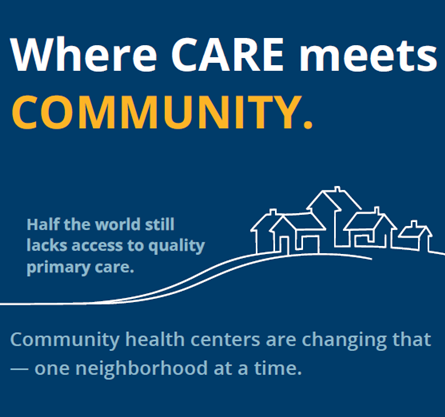
Together we serve nearly 60 million patients in communities that every other part of the health system struggles to reach. IACHC is looking for health systems, funders, innovators, and policymakers who want to help scale what works, globally.
Derived from South Africa’s creation of Community Health Centers, the journey of CHCs in the United States began in 1965, thanks to pioneering doctors and concerned citizens who recognized the critical need for affordable primary care in underserved communities. The first U.S. CHCs (originally called Neighborhood Health Centers) were funded as a demonstration project under the Federal Office of Economic Opportunity, the lead federal agency in President Lyndon Johnson’s War on Poverty.
These fledgling CHCs efficiently targeted local health needs with the help of patient-majority governing boards and over the course of six decades became the largest, most resilient, and innovative healthcare systems in the United States.
Primary Care Global Impact
Global Health Workforce Shortage: 6.4 million physicians, in addition to 30.6 million nurses and midwives, 3.3m dental professionals, and 2.9 million pharmaceutical professionals (2019)
Primary Care And Telehealth Remain Underutilized Internationally: Fewer than 10% of primary care physicians report that more than 75% of patient visits occur through telehealth, even after the COVID era expansion of virtual care, indicating opportunity for greater understanding and use of health technology
Primary Care Can Reduce Avoidable Emergency Department Utilization Globally: Organisation for Economic Co-operation and Development (OECD) analyses show that many ED visits can be managed in primary care settings.